

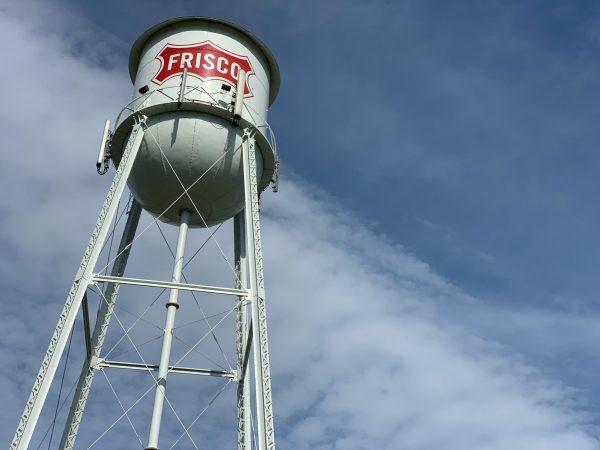
 The typical Texas summer used to be a predictable season of heat and humidity, but the last decade has rewritten the state’s weather diary with crazy and dangerous writing. In Frisco, the local community is no longer just seeing minor changes in the breeze, residents are witnessing a transformation of the environment that threatens the long-term stability of the region. From the record-breaking heatwaves of recent summers to the devastating “weather whiplash” events of 2025, the signs of a changing climate are no longer up for argument! With local temperatures rising and weather patterns becoming increasingly unpredictable, Frisco must recognize that climate change is a major, current issue that requires more than just individual effort.
The community and its leaders should officially recognize climate change as a major threat to local infrastructure and public safety, moving beyond small gestures toward a full policy reform.
This stance is supported first by the undeniable shift in local weather extremes. While some may remember hot summers from decades ago, the intensity of current heatwaves has reached new heights. My dad, Erick Mida, noted that “our summers are harsher, they are drier, and our winters are more extreme” compared to twenty years ago. This isn’t just a personal observation, recent data shows that 2024 was the warmest year on record, after a decade where all ten of the warmest years occurred. My mom, Leslie Mida, also recalled that while a 100-degree day was once a major event, “now, you know, I don’t think we flinch at that”. These extreme temperatures put a massive strain on our health and our energy bills, turning a seasonal inconvenience into a year-round crisis for many Frisco families.
Secondly, the increasing frequency of insane weather events proves that the local climate has become dangerously unpredictable. My brother, Will Mida, pointed to a pattern of “unusual” weather, specifically remembering the 2021 freeze that “wiped out the power grid and even took some lives”. These events are part of a trend scientists call “weather whiplash,” the sudden change from extreme drought to historic flooding, as seen in Texas throughout July 2025. My sister, Natalie Mida, also said that these extremes are “becoming more disruptive” and that winter storms have changed from rare events to “a yearly, kind of predicted things since 2021”. This instability makes it impossible for our city to prepare using old ideas, as our infrastructure was never designed to handle such rapid swings between frozen pipes and parched reservoirs.
The strongest argument for action right now is the scale of the solution required. While individual actions like recycling are helpful, they cannot match the big reality of the problem. My dad emphasized that “massive institutional policy change is necessary” because “this is a solution that only big government can fix”. My sister agreed, saying that individual actions aren’t enough and “we definitely need serious policy change at like the state and local levels”. Experts support this, saying that because of climate change, the dry line of the 100th meridian is shifting east, pushing hotter winds toward major cities like Dallas and Frisco. If the environment is moving the desert to our houses, we cannot expect a few blue recycling bins to hold it back!
Critics often say that these weather patterns are simply part of a “natural cycle” the Earth has experienced for thousands of years. My mom addressed this by saying that while nature has rhythms, we must look at “how fast those changes are coming now”. My dad warned that ignoring recent data is dangerous, asking, “What if this isn’t reversible? And if we wait too long, it surely will be”. My sister summarized the risk of inaction, stating that “ignoring it doesn’t make us necessarily like skeptical… it makes us unprepared”. Relying on the excuse of a natural cycle is kind of like refusing to put out a house fire because “the sun is hot anyway.”
To address this, Frisco should immediately implement a local plan to fight climate change. My sister suggested “investing in grid resilience and renewable energy,” such as solar power paired with battery storage for schools and hospitals. My mom recommended starting with “more trees… for shade and reduction of heat” to combat the urban heat-island effect caused by our city’s rapid growth. We should also make stricter city regulations on water utilization and exhaust to make sure our resources last as long as our community does.
Climate change is not a far-away problem for the next generation, it is a current crisis impacting Frisco’s resources and safety. If local leaders wait for a perfect consensus before acting, they will find themselves trying to fix a cycle that has already gone out of control. It is time for Frisco to stop flinching at the heat and start building a cooler, more resilient future. Our city prides itself on being a place of growth and innovation, so let’s start changing before our growth is permanently affected by a climate we refused to acknowledge.